
AI Tickling Roleplay Turn Taking: One Reply at a Time
Keep your reaction yours. Distinguish a round from a reply, repair a skipped turn and carry a clear pause state into the next exchange.

AI tickling roleplay turn taking needs a handover, not a longer description. Ask for one invitation, leave your reaction unwritten, and decide when the agreed round ends. If the AI jumps ahead or awards itself a point, bring the conversation back to the last choice you actually made. These are writing suggestions for fictional adults, not settings that enforce a game.
- A turn is one player’s contribution; a round can contain several replies.
- Keep acceptance, reaction and scoring separate so the AI has a clear place to wait.
- A written pause request is a conversation instruction, not a guaranteed technical stop.
Count the round, not every chat bubble
In a three-round game, the invitation might take one message, the answer another, and the closing banter a third. That does not automatically mean three rounds have finished. Before starting, decide what ends one round: an accepted challenge and the response to it, or a question and its answer. Pick one definition that fits your scene.
Keep the counter outside the dramatic prose. An editorial recap such as “Round 1 of 3 is complete; you invite next” is easier to check than a paragraph that quietly declares a rematch, changes the score and starts another challenge. A short game still needs those decisions. Our game guide covers the initial invitation, passing and lead order; this article deals with what to do when a reply gets ahead of them.
Give the AI a place to hand the turn back
Try a small agreement before an adult fictional tickling scene: “We alternate invitations. Write only your character’s words and choices. Offer one question or challenge, then wait for my answer. I write my own reactions. Passing has no penalty. Pause ends the current round.” You can choose a different tone, but keep the ownership of each reply explicit.
Authored example, not a recorded AI response: “One playful round? You can choose a question instead, or pass.” That sentence leaves a decision open. Your next message supplies your character’s answer. The AI’s following reply can acknowledge it and offer its part of the exchange; it does not need to decide your feelings or complete the whole scene.
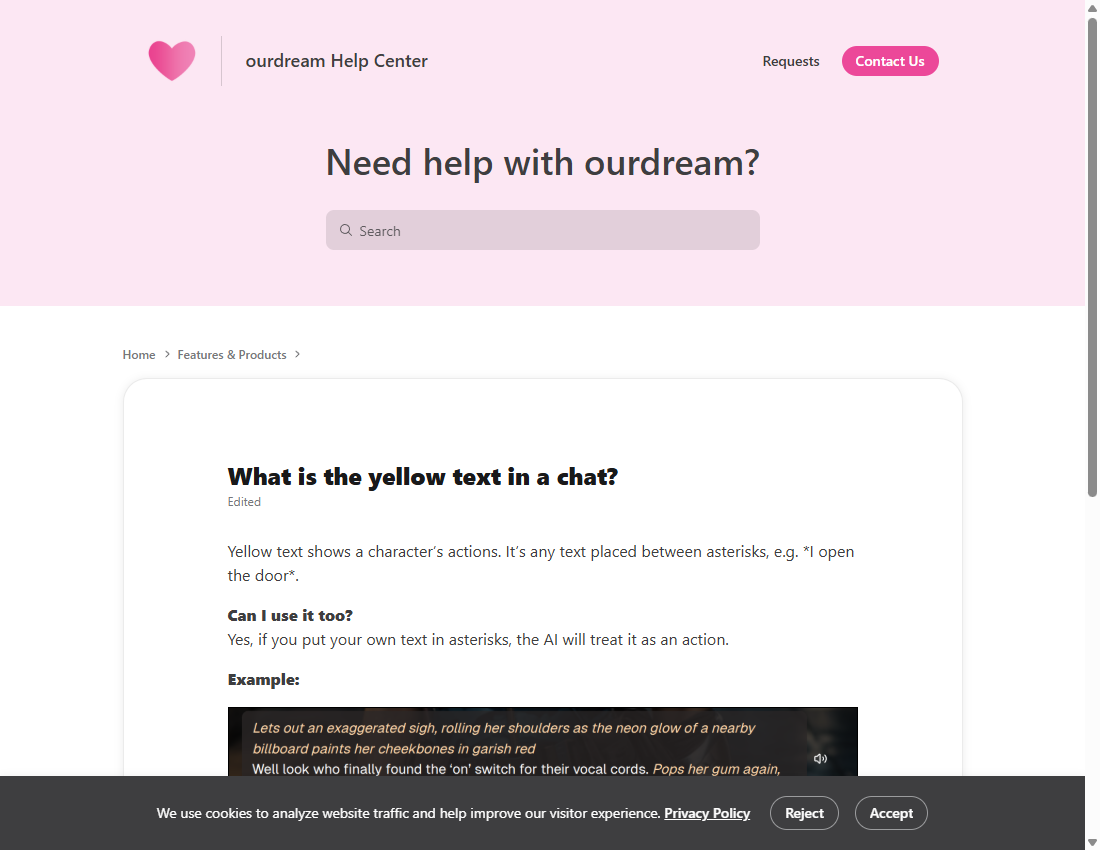
OurDream’s action-formatting help, checked October 2, 2026, says text inside asterisks represents character actions and readers can use it too. This gives you a way to distinguish an action from speech. It does not establish a separate player-control switch or promise that the model will always respect the distinction.
Read the reply before accepting the result
Look for the point where the reply stops being an invitation and starts deciding for you. An AI character can say that it hopes to win the round. That is different from writing that your character accepts, laughs, loses a point and agrees to another round. Those are several decisions bundled into one answer.
Keep any part you want to use and correct the unwanted result in plain language. For example: “The invitation stands, but my reaction has not happened yet. Keep round one open and wait for my answer.” You do not have to justify the correction inside the fiction. It is an editing note about who gets to write the next contribution, not a new event in the scene.
Repair one mistake with a small state recap
If the AI invents a score, restate the last agreed score instead of arguing about its invented event. If it skips to round three, name the current round. If it writes your dialogue, return to the last invitation and supply your own answer. Separate these errors so a correction has one clear job.
A useful authored recap is: “Current round: 1 of 3. Score: not yet awarded. Next choice: mine. Continue only after I answer the invitation.” Keep only the fields your game needs. A score is optional; when it distracts from the banter, drop it and keep the alternating invitations. None of these notes guarantees the next response will follow them.
The local game chooser can help you review round count, lead order and stop wording. Its card is a plan on this website. Changing it does not change a partner conversation, send a message or install a turn counter. Restate the relevant agreement in whichever chat you open.
Pause the fiction without racing the next reply
For an intentional break, make the request direct: “Pause the scene. No new challenge. We are between rounds one and two; I invite next if we resume.” When returning, repeat the same short state rather than relying on an earlier line to remain understood. If the response ignores your stop request, end the conversation rather than treating another prompt as an enforcement mechanism.
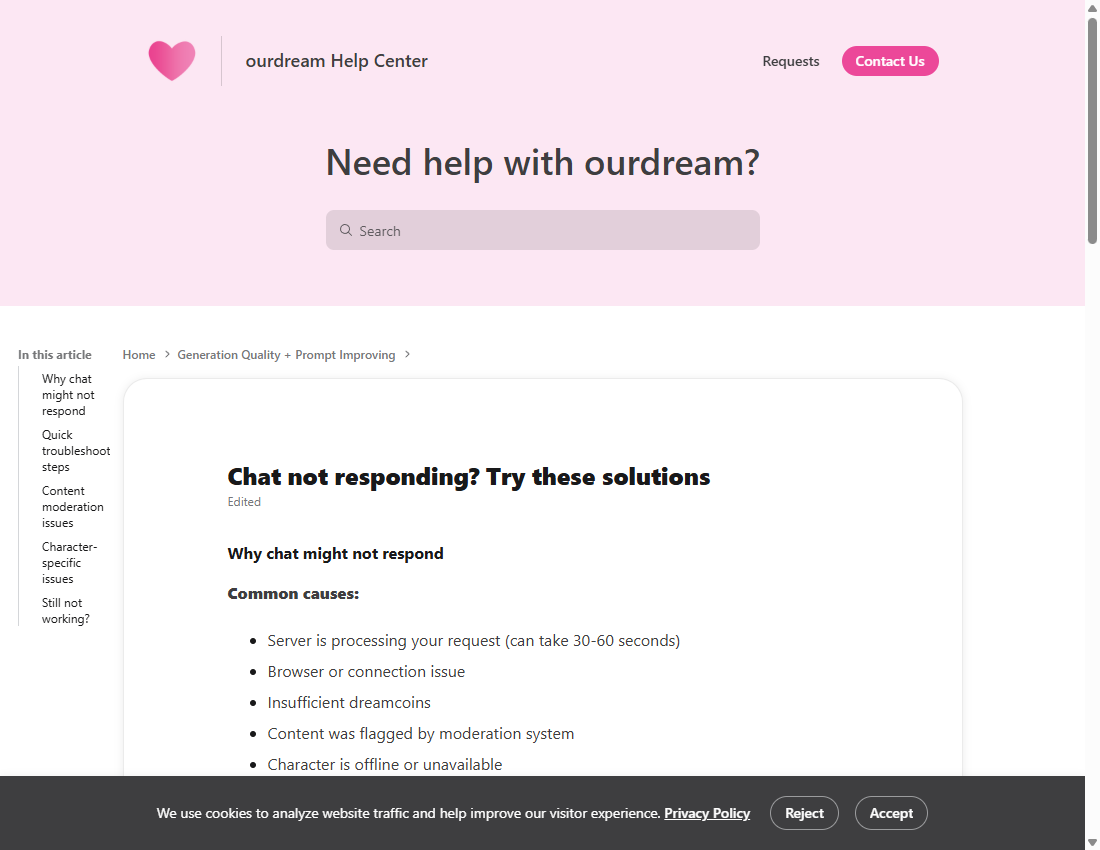
A missing response is a different situation. OurDream’s chat troubleshooting page, checked October 2, 2026, lists processing delays, connection issues, insufficient coins and moderation among possible causes. It advises against sending multiple messages quickly. Silence therefore does not prove that a fictional pause was understood. Read any visible error and use the provider’s help instructions before starting another turn.
What the conversation cannot promise
The public help pages reviewed for this article do not establish a native tickling-game timer, automatic referee or rule-enforcement engine. The round labels and corrective notes above are our editorial method for managing written fiction. They have not been measured in an authenticated OurDream session, and there is no documented success rate for this wording.
OurDream’s coin-cost guide, checked October 2, 2026, documents charges for certain chat models and voice or generated media. Choosing a playful text scene does not establish an included media allowance. Read our partner access and costs guide before adding those options; this article makes no promise of free play, immediate voice access or a particular generated result.
This approach suits someone who enjoys steering a story and can check the last agreed state. Skip a general character chat for this job if you need a fixed game with automatic scoring, a reliable countdown or rules enforced independently of generated text. Text fiction also does not create physical sensation. A shorter round can make the writing easier to follow, but it cannot turn a language model into a tested game engine.
Before your next invitation, check three things: whose choice is still open, which round you are in, and whether another round was actually agreed. If those are clear, you have somewhere to hand the story back. If they are not, a one-line reset is a better next move than adding another page of scene description.
Prepared by the AI Tickling editorial desk. Public documentation and local chooser source checked October 2, 2026. All dialogue, game-state labels and recovery examples above are authored fiction. No paid product test or partner response is presented as evidence.
Questions before you start
Does one AI reply finish a round?
Only if that is the ending you agreed. An invitation, an answer and a closing reply can belong to one round. Keep the round count separate from the number of messages.
What if the AI writes that I accepted a challenge?
Return to the invitation and state that your choice remains open. Then write your own answer. A corrective note can request that boundary, but cannot guarantee compliance.
Should a pass cost a point?
For the suggested game, passing has no penalty. Say that before playing and restate it if the AI invents a deduction. You can also leave scoring out entirely.
Is Pause a stop button inside OurDream?
Here it is suggested wording for a chat instruction. The reviewed public sources do not establish it as a dedicated game-control button or guarantee that it halts generated fiction.
How do I restart after a break without replaying everything?
Give the current round, last agreed score if any, and next inviter. Say the scene is still paused until you agree to continue. This is an editorial recap, not a saved-game feature.