 AI Tickling
 Roleplay Cooperative Rounds: Team Up
You can share a game without finding a winner. Choose a small joint goal, contribute one idea each and leave the outcome open until both have answered.
On this page
Give the round one shared result
AI tickling roleplay cooperative rounds offer a different mood from a challenge that someone must win. You might want playful banter without counting reactions, declaring a loser or repeating the same contest. Set one small result that both participants help create: a ridiculous invitation, an imaginary game-night poster or a jointly chosen ending to a comic scene.
These original adult game-night scenes stay conversational: you contribute an idea rather than an invented physical reaction. If you want a competitive format instead, the game guide already explains three choices. Switching to cooperation changes the objective, not the account or provider's underlying features.
Three ways to play on the same side
- The absurd invitation: one participant proposes the title of an invented party; the other chooses its unlikely house rule. Agree on the finished invitation together.
- The improvised postcard: choose an imaginary destination, contribute one funny observation each, then decide which line belongs on the card. No real travel details are needed.
- The scene rescue: take a comic misunderstanding, suggest one way out each and pick the ending you both want to keep. A rejected idea remains available for another round rather than becoming a defeat.
Start with one of these, not all three. A clear shared result makes it easier to notice whether each side actually had a choice. “We finish one invitation together” says more about the activity than “be funny and cooperative.” The latter leaves both the task and its ending undefined.
An opening that asks for a teammate
Imagine two fictional adults, 29 and 33, at a quiet game night. One asks: “Want to invent the world's least practical party invitation? I'll suggest its name, you choose a house rule, and we can both reject an idea. One invitation, no score.” Adapt the invitation to the profile you choose.
Suppose your first contribution is “The Annual Meeting of People Who Forgot Why They Came.” Wait for the other participant's house rule instead of writing it yourself. Then choose whether the two ideas fit. The comedy comes from combining contributions, not from the AI explaining that you laughed or accepted a challenge. If the mood changes, propose another activity before declaring this one complete.
What the public documentation supports
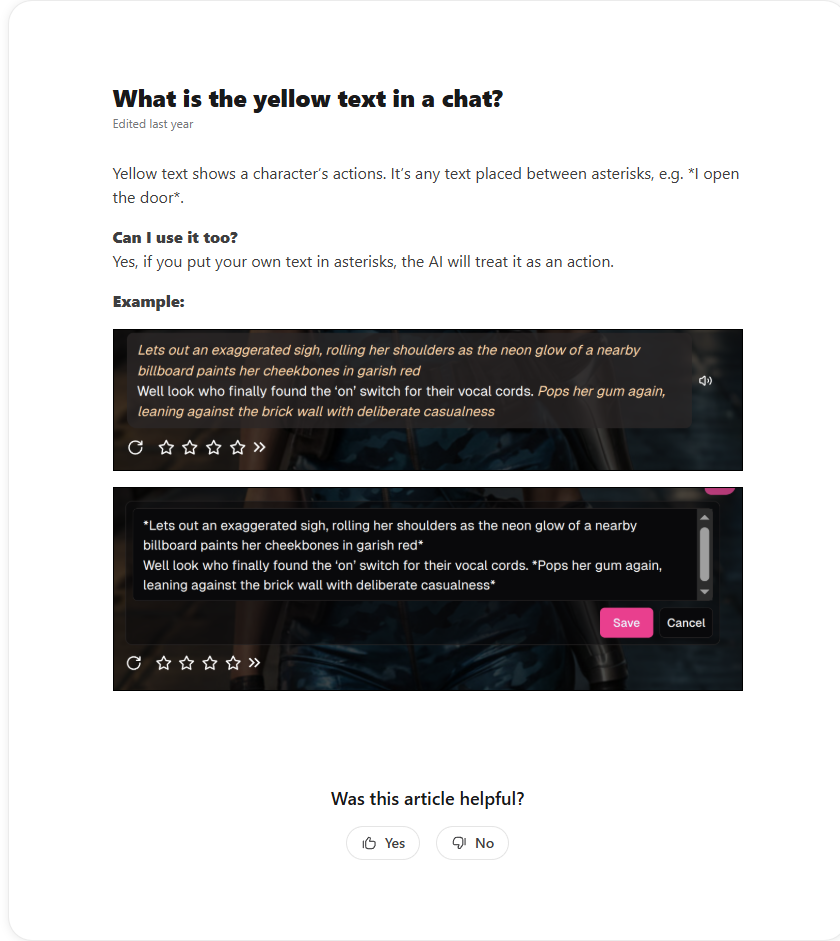
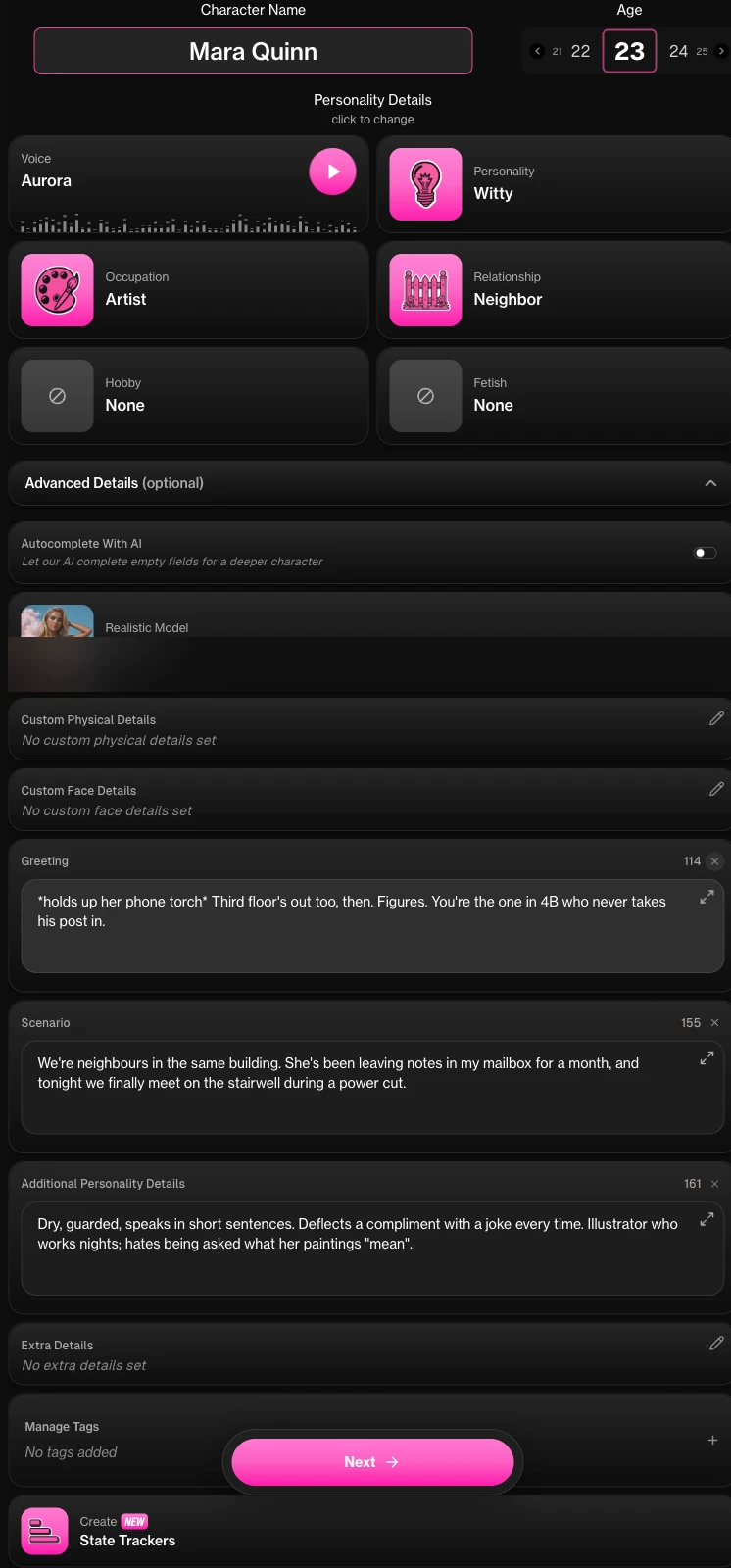
OurDream's action-text help documents asterisks as action notation. Its creator guide separates Greeting from Scenario. These public pages were captured on October 11, 2026. They document text formatting and creator fields; the team-game examples are authored fiction, without a paid-session test.
If you create a character, use the situation for the shared activity and the opening for its invitation. If you choose a public profile, read its existing premise before proposing the game. Introduce the shared goal in your own message and leave the first contribution unanswered. Keep the first attempt short enough to assess the reply yourself.
A pass changes the plan, not the winner
A shared goal should survive an unwanted suggestion. If you do not want to write a postcard, choose the invitation or stop the activity. Do not convert a pass into a lost point or an invented reaction. If the AI finishes both contributions itself, keep the part you actually chose and reopen the missing contribution: “Keep my party title. Your house rule is still open; offer one and wait for my answer.”
If the next reply still makes decisions for you, do not call the game successfully cooperative. You can change the premise, shorten the exchange or leave it. The turn-taking article covers the related problem of skipped replies in more detail; use it if the next reply keeps taking your part.
Finish something small before adding another round
Close the invitation only when you have chosen which version to keep. Then ask whether to do another, change the activity or finish the conversation. Keeping a final line you both shaped provides an ending without a scoreboard. A round does not need a timer, generated picture or fictional punishment to have a clear result.
This suits someone who enjoys making a scene together. It is a poor fit for someone looking for an objective referee, an automatically checked win condition or a tested multiplayer mode. Check the actual destination and access choices separately. Read a profile's premise and start with one short invitation.
Questions before you start
What makes a round cooperative?
Both contributions work toward one small result. A round is not cooperative merely because the AI announces that you both won; your own contribution still needs to remain yours.
Do we need to remove all scoring?
For these examples, yes. Finishing a shared scene is enough. If keeping a competitive score is the part you enjoy, use the separate game guide instead of adding a second set of rules here.
Can either player pass?
Yes in the proposed rules. A pass leaves a choice open or changes the activity; it does not create a penalty or force an invented reaction. A provider model may still need correction.
Does OurDream run these team games automatically?
No automatic team-game feature was verified for this article. The public documentation establishes text and creator fields, not an enforced cooperative objective or completion detector.
Do I have to add images or voice?
No. These are text-based fictional activities. Generated media is a separate choice with access and credit details to check in the live service.